✦ HoodServe Blog
Business Growth
How Automated Follow-Ups Increase Repeat Bookings
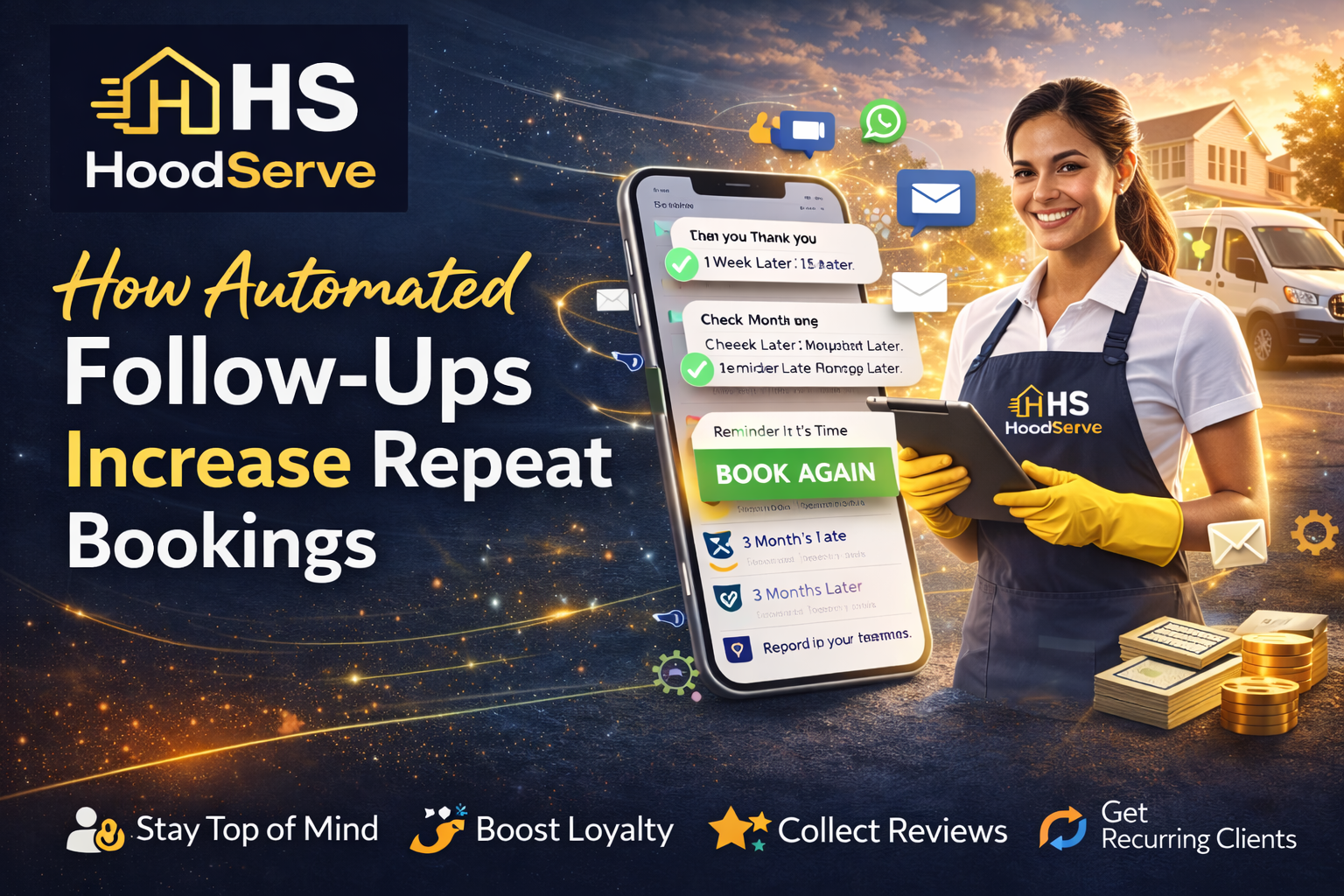
For most service businesses, the easiest revenue does not come from finding new clients—it comes from serving the same customers again.
Unfortunately, many businesses lose repeat bookings simply because they forget to follow up with past clients. People get busy, they forget, and eventually they hire someone else.
This is where automated follow-ups make a huge difference. By automatically reminding customers about services, promotions, and check-ins, businesses can dramatically increase repeat bookings without spending more money on marketing.
Automated follow-ups are scheduled messages sent to clients after a service has been completed. These messages can be sent via email, SMS, or notifications through a CRM system.
Instead of manually contacting every customer, automation sends the messages at the right time automatically.
Examples of automated follow-ups include:
This keeps your business in the customer's mind without requiring extra work.
Most customers do not intentionally leave a service provider. The real reason they disappear is much simpler: they forget.
If you cleaned their home three months ago, they may simply forget to call again. Or they may search online and contact a different company.
Without follow-ups, you are relying entirely on the client to remember your business.
Automated reminders solve this problem.
Automated follow-ups keep your business visible to customers.
For example, a cleaning company might send a reminder every three months saying:
"It's time for your next home cleaning. Would you like to schedule your next appointment?"
This simple message often leads to an immediate booking.
Many services are recurring by nature. Examples include:
Automated reminders encourage customers to schedule their services on a consistent basis.
Instead of waiting for clients to call again, your system reminds them automatically.
Follow-ups make customers feel remembered and valued.
Messages like these create a stronger relationship:
These small touches help build long-term loyalty.
Online reviews are one of the most powerful tools for growing a service business.
Automated follow-ups can send review requests after every completed job.
For example:
"Thank you for choosing us. If you enjoyed our service, we would appreciate a quick review."
Businesses that automate review requests often collect significantly more reviews than those who ask manually.
Without follow-ups, many customers remain one-time clients.
Automation helps convert them into recurring customers by keeping communication active.
For example:
This sequence gently guides the customer back to your service.
Manually contacting every past client is time-consuming and unrealistic for growing businesses.
Automation allows business owners to focus on running the business while the system handles communication.
Once set up, the system works continuously in the background.
Modern CRM systems allow businesses to create automated workflows based on client activity.
These systems can trigger messages when:
Everything happens automatically without requiring manual effort.
Repeat customers are often the most profitable part of a service business.
Acquiring a new client usually requires advertising, promotions, or referrals. However, encouraging an existing customer to book again costs almost nothing.
Businesses that implement automated follow-ups often see:
Automated follow-ups are one of the simplest ways to increase revenue for a service business.
Instead of relying on customers to remember your company, automation keeps communication active and encourages repeat bookings.
Platforms like HoodServe include built-in automation tools that allow service businesses to manage client communication, reminders, and follow-ups from one system.
If you want to increase repeat bookings without spending more on advertising, automated follow-ups are one of the most powerful tools available.
The all-in-one platform for service businesses. No credit card needed.
Start free trial →